What to Do for Tooth Pain at Night: Proven Relief Tips
Few things are more miserable than being jolted awake at 2 AM by a sharp, throbbing toothache. The pain feels sharper in the quiet of night, the local pharmacy is closed, and you're stuck wondering what to do for tooth pain at night until morning. You're far from alone—CDC data shows that tooth disorders account for nearly 1.9 million U.S. emergency-room visits every year, and a large share of those trips start with the exact kind of nighttime agony you're feeling right now.
The good news? Most nighttime tooth pain can be safely managed at home for several hours using clinically proven methods. This guide walks you through what causes night toothaches, the most effective home remedies, which OTC medications actually work, when you need an emergency dentist, and how to stop the cycle from happening again.
TL;DR / Quick Answer
If you're searching for what to do for tooth pain at night, start with ibuprofen 400 mg alone or combined with acetaminophen 500 mg, rinse with warm salt water, apply a cold compress to your cheek, and sleep with your head elevated. These steps reduce the inflammation and pressure that make toothaches worse when you lie down. Avoid placing aspirin directly on the gum, skip alcohol-based gels, and book an emergency dental visit within 24 hours if pain persists beyond two days or comes with fever, swelling, or a foul taste.
Why Tooth Pain Often Gets Worse at Night
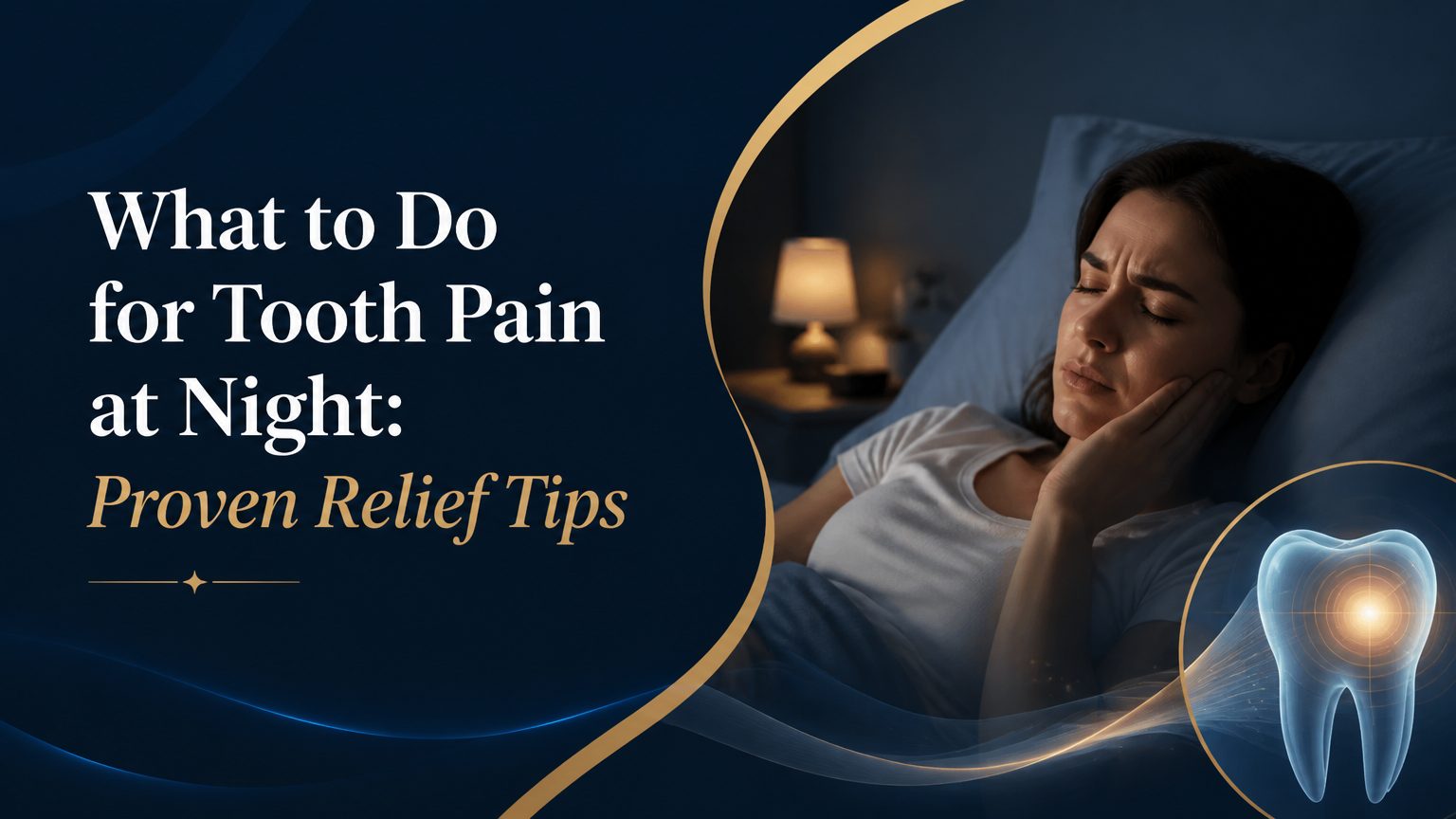
There's a real biological reason your tooth starts screaming the moment your head hits the pillow. When you lie down, gravity no longer helps drain blood away from your head and jaw. Blood pools in the inflamed pulp chamber inside your tooth, raising internal pressure on the nerve. That pressure is what produces the classic "throbbing" sensation that seems to pulse with your heartbeat once the house is quiet.
A 2025 clinical interpretation published in the British Dental Journal confirms this mechanism, noting that tooth pain worsening when lying down is strongly linked to symptomatic irreversible pulpitis—the medical term for an infected, dying nerve inside the tooth. The review explains that increased blood flow in the supine position heightens nerve sensitization, which is exactly why so many patients report pain that magically eases the moment they sit upright or walk around the room. Cortisol, your body's natural anti-inflammatory hormone, also drops to its lowest levels around midnight. Less cortisol means less built-in pain control, so the same ache that barely bothered you at 3 PM feels unbearable at 3 AM.
Before reaching for any medication, try these safe, evidence-backed home measures that can buy you several hours of comfort. First, a warm salt-water rinse: stir half a teaspoon of table salt into 250 ml of warm (not hot) water and swish it gently around the painful side for 30 seconds before spitting. Salt draws out fluid from inflamed tissues, reduces bacterial load, and soothes irritated gums. Second, apply a cold compress to the outside of your cheek for 15 minutes on, 15 minutes off. Cold constricts blood vessels, slowing the inflammatory pulse and numbing the area.
Two more options worth knowing: dab a single drop of pure clove oil on a cotton ball and place it against the offending tooth or gum, since eugenol is a natural anesthetic and antiseptic used in dentistry for over a century; and prop yourself up with two pillows or sleep in a recliner to reduce blood pooling in the jaw. Avoid these popular but harmful "remedies": placing aspirin directly on the gum (it causes chemical burns), using whiskey on the tooth (it dries tissue and damages enamel), or applying undiluted essential oils (they irritate mucosa). If home measures don't give you at least partial relief within 30 minutes, move on to OTC medication.
Over-the-Counter Pain Relief That Actually Works
Not all painkillers are created equal for tooth pain. The 2024 American Dental Association clinical practice guideline, developed with the University of Pittsburgh and the University of Pennsylvania and based on 82 randomized controlled trials, gives a clear ranking that should guide your medicine cabinet. First-line therapy is ibuprofen 400 mg, a non-steroidal anti-inflammatory drug (NSAID) that targets the prostaglandins causing pulp inflammation. Take it with a small snack to protect your stomach lining.
The best combination is ibuprofen 400 mg plus acetaminophen 500 mg taken together. They work through different pathways and outperform opioid analgesics for dental pain in head-to-head trials—without the addiction risk. This pairing is now considered the gold standard for temporary toothache relief. A second-line option is naproxen 220 mg if ibuprofen upsets your stomach, and acetaminophen alone (500–1000 mg) is acceptable if you can't take NSAIDs due to ulcers, kidney issues, or pregnancy (after doctor approval). What you should avoid is codeine, tramadol, or any opioid—the ADA guideline explicitly recommends against opioids as first-line therapy for dental pain because of their unfavorable safety profile. Topical benzocaine gels like Orajel provide only short-lived surface numbing and should not be your main strategy. Never place a pill directly on the gum.
Sleep Hacks to Reduce Nighttime Tooth Pain
When the pain is tolerable but persistent, sleep strategy matters as much as medication. The single biggest change is sleeping on your back with your upper body inclined 30 to 45 degrees, using a wedge pillow or stacking two regular pillows. This position reduces venous pooling in the head and lowers intrapulpal pressure, directly counteracting the lying-down mechanism described earlier. If you must sleep on your side, lie on the opposite side from the painful tooth—pressure on the affected side can aggravate an already inflamed area.
Two more habits make a real difference. Many people breathe through their mouth when they're in pain, which dries the oral tissues and makes them more sensitive; applying a thin layer of petroleum jelly or beeswax-based lip balm around the mouth before bed and running a humidifier keeps the bedroom air moist. Also avoid late-night triggers: don't eat sugary foods, drink very cold water, or chew on the painful side right before bed. If you must eat something, choose plain yogurt or lukewarm soup at least an hour before lying down. Finally, a 10-minute body-scan meditation or slow-breathing exercise (4 seconds in, 7 seconds hold, 8 seconds out) can lower perceived pain intensity enough to drift off—pain feels worse when you focus on it.
Common Dental Causes of Nighttime Tooth Pain
Understanding the cause helps you decide whether to wait until morning or head straight to an emergency clinic. The most common culprit is tooth decay and cavities—bacteria dissolve enamel and expose the underlying dentin, which contains microscopic tubules leading straight to the nerve. Cold air, sweet foods, and pressure all trigger sharp pain that intensifies at night when saliva flow drops and there's nothing to distract you from the sensation.
Several more serious causes deserve attention. Pulpitis is inflammation or infection of the pulp, the soft tissue inside the tooth holding nerves and blood vessels; reversible pulpitis causes short, sharp pain that goes away quickly, while irreversible pulpitis causes the spontaneous, throbbing, nighttime pain that wakes you up and requires root canal treatment or extraction. A cracked or fractured tooth—often caused by biting something hard, grinding, or old fillings that have weakened the structure—produces pain when you bite down or release the bite, with hot/cold sensitivity that lingers. A dental abscess is a true emergency, presenting with constant throbbing, faci
al swelling, fever, and sometimes a foul taste. Other possible causes include impacted wisdom teeth (pericoronitis), bruxism, and even sinus infections that refer pain to the upper molars.
Some toothaches can safely wait until the next business day; others cannot. Call an emergency dentist or go to the ER if you have facial swelling that is rapidly spreading—especially toward the eye or throat—fever above 101°F combined with dental pain, difficulty opening your mouth, swallowing, or breathing, uncontrolled bleeding from the mouth, a visibly abscessed tooth with pus discharge, trauma from a knocked-out, loosened, or fractured tooth, or pain so severe that OTC medication provides no relief after two doses. A 2025 PeerJ analysis of 2,717 dental emergency consultations found that the busiest hours are between 20:00 and 22:00, and pulpitis was the single most common diagnosis, accounting for 988 of those visits because nighttime sympathetic excitation amplifies spontaneous pain.
Pain that wakes you from sleep is rarely "just sensitivity." It usually signals irreversible pulpal inflammation that needs professional treatment within 24 to 48 hours. If you're in the Mumbai Metropolitan Region, an established clinic like The Dental Solutions – Dentist in Thane offers same-day emergency slots and can stabilize the pain before scheduling definitive treatment. Don't try to tough out swelling, because it can become life-threatening if the infection spreads to the airway.
Professional Treatments for Persistent Night Tooth Pain
Once you're in the chair, your dentist has several tools to stop the pain for good, not just for one night. The definitive treatment for irreversible pulpitis is root canal therapy: the infected pulp is removed, the canals are disinfected and shaped, and the space is sealed with gutta-percha. Modern RCT is virtually painless thanks to local anesthesia and is usually completed in one or two visits. Restorative Dentistry treatments at established clinics often combine RCT with a crown to protect the weakened tooth long-term. When a tooth is too damaged to save, extraction is performed under local anesthesia as a last resort, providing immediate relief.
Several other professional options address different causes. For reversible pulpitis from a cavity, a simple composite filling removes decay and seals the tooth. For gum-driven pain, scaling and root planing cleans below the gum line. If your "tooth" pain is actually jaw-joint or muscle pain radiating to the teeth, TMD Treatment for jaw-related pain addresses the real source—night guards, physiotherapy, and bite adjustment often eliminate the discomfort entirely. Modern clinics offering Digital Dentistry for accurate diagnosis use tools like T-Scan and Tek Scan to pinpoint exactly which tooth is loading abnormally, identifying problems traditional X-rays sometimes miss.
Preventing Tooth Pain at Night: Long-Term Strategies
The best way to handle nighttime tooth pain is to never get it in the first place. Six-monthly check-ups are the single most important habit, because many cavities, cracks, and gum problems are symptom-free until they become emergencies. Routine Preventive Dentistry to avoid future tooth pain catches issues while they're cheap and easy to fix, often before they ever wake you at night.
Five more long-term habits make a measurable difference. If you grind your teeth, a custom-fitted night guard protects enamel and reduces muscle pain. Treat sinus issues promptly with a physician, because chronic sinus inflammation mimics toothache in t
he upper molars. Watch your diet—limit sugary snacks and acidic drinks, especially right before bed, since bacteria feed on sugar and produce acid that erodes enamel overnight when saliva flow drops. Brush and floss right before bed, not after dinner, because most "night" bacteria do their damage in the hours between dinner and sleep. And finally, don't ignore early warning signs like a twinge with cold drinks, a chip you can feel with your tongue, or bleeding gums—fixing them now prevents the 3 AM emergency later.
Conclusion
Waking up with tooth pain feels isolating and frightening, but it's also a signal—and a common one. With ibuprofen 400 mg combined with acetaminophen 500 mg, a salt-water rinse, a cold compress, and an elevated sleeping position, you can almost always get through the night comfortably. Just as importantly, schedule a dental visit within 24 to 48 hours so the underlying problem doesn't return. If you're in Thane or nearby, Contact The Dental Solutions at +91-9920744926 to book a same-day consultation with a NABH-accredited team that has served more than 3,500 patients. Don't let one bad night become a long-term dental problem—get it checked while the fix is still simple and affordable.
FAQs
What to do for tooth pain at night when nothing is open?
Take ibuprofen 400 mg with acetaminophen 500 mg, rinse with warm salt water, apply a cold compress, and sleep with your head elevated. These steps follow the American Dental Association's 2024 first-line guideline for temporary toothache management until you can reach a dentist.
Why does tooth pain get worse at night when lying down?
Lying down increases blood pooling and pressure inside the inflamed pulp chamber, while cortisol (your natural pain-control hormone) drops to its lowest levels around midnight. Together, these changes make existing pulpitis pain feel sharper and more throbbing.
Is ibuprofen or acetaminophen better for nighttime toothache?
The ADA recommends ibuprofen 400 mg alone, or ibuprofen combined with acetaminophen 500 mg, as the most effective first-line treatment. This combination outperforms opioid painkillers in clinical trials and is safer for short-term use.
How long can I safely manage tooth pain at home before seeing a dentist?
You can safely manage mild pain with OTC medication and home remedies for 24 to 48 hours. However, any pain severe enough to wake you from sleep, or pain with swelling, fever, or a bad taste, needs professional care within hours, not days.
Can I use clove oil or Orajel for nighttime tooth pain?
Clove oil (eugenol) is a natural anesthetic and can provide short-term relief when dabbed on a cotton ball against the painful tooth. Orajel and other benzocaine gels offer only brief surface numbing and shouldn't be your main pain strategy.
When is nighttime tooth pain a dental emergency?
It's a dental emergency if you have rapidly spreading facial swelling, fever above 101°F, difficulty swallowing or breathing, uncontrolled bleeding, visible pus, or trauma to a tooth. These symptoms can signal a spreading infection that requires immediate professional care.
What sleeping position helps reduce tooth pain at night?
Sleep on your back with your upper body elevated 30 to 45 degrees using a wedge pillow or two stacked pillows. This position reduces blood pooling in the head and lowers pressure inside the inflamed tooth.
How do I stop tooth pain at night from coming back?
Maintain six-monthly dental check-ups, wear a night guard if you grind your teeth, brush and floss right before bed, avoid late-night sugary snacks, and address sinus issues promptly. Preventive care is the only reliable way to keep toothaches from returning.
Suggested Internal Links Used
Dentist in Thane → https://www.thedentalsolutions.in/
- Restorative Dentistry treatments → https://www.thedentalsolutions.in/restorative-dentistry
- TMD Treatment for jaw-related pain → https://www.thedentalsolutions.in/tmd-treatment
- Digital Dentistry for accurate diagnosis → https://www.thedentalsolutions.in/digital-dentistry
- Preventive Dentistry to avoid future tooth pain → https://www.thedentalsolutions.in/preventive-dentistry
- Contact The Dental Solutions → https://www.thedentalsolutions.in/contact-us
Suggested External References
 +91-9920744926
 139, 1St Floor,
Lodha Boulevard,
Majiwada, Thane West -400601
 Mon- Sat: 11:00 am to
8:00 pm

 Home /