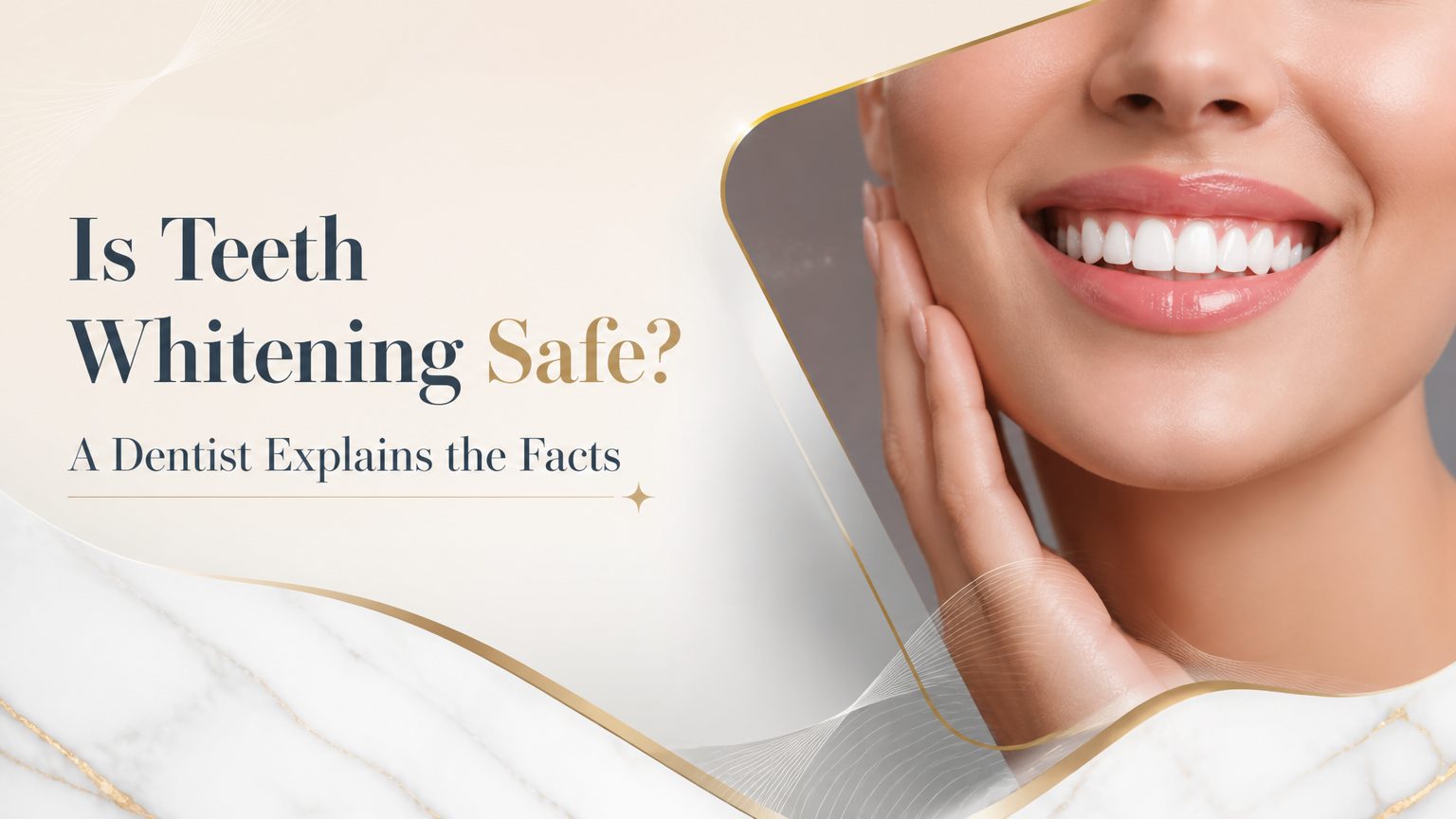
Is Teeth Whitening Safe in 2026? A Dentist Explains the Facts
A bright, white smile has become almost a default expectation in 2026 — on video calls, in selfies, and in professional settings. So it is no surprise that searches for "is teeth whitening safe" have surged alongside the booming market for whitening strips, gels, pens, and salon treatments. The honest answer from a dentist's chair: yes, professional teeth whitening is broadly safe when supervised by a qualified clinician. But the same cannot always be said for over-the-counter kits, beauty parlour procedures, or products bought from online marketplaces. This guide explains what actually happens during whitening, the real risks versus the overblown fears, and the questions you should ask before letting anyone touch your teeth.
Overview
This comprehensive, dentist-reviewed guide walks readers through the science, safety profile, and practical considerations of teeth whitening in 2026, helping consumers distinguish evidence-based treatment from risky trends.
TL;DR / Quick Answer
Professional teeth whitening is safe when performed by a qualified dentist, with side effects limited to temporary sensitivity and minor gum irritation that fade within days. The biggest safety risks in 2026 come from unregulated salon gels, illegal online peroxide products, and DIY remedies that erode enamel. Always get a pre-whitening dental exam, choose dentist-supervised treatments, and avoid beauty parlour whitening.
Table of Contents
- What Causes Tooth Discoloration and When to See a Dentist
- Types of Stains and Why Severity Matters for Whitening Safety
- Whitening Methods Explained: Professional, At-Home, and Salon Options
- Common Side Effects vs. Real Safety Risks
- Who's a Good Candidate (and Who Should Avoid Whitening)
- Why Professional Whitening Is Safer Than DIY and Salon Treatments
- Aftercare: How to Maintain Results Without Damaging Enamel
- Red Flags and How to Choose the Right Dentist for Safe Whitening
What Causes Tooth Discoloration and When to See a Dentist
Tooth discoloration falls into two broad categories, and understanding which type you have is the first step toward safe whitening. Extrinsic stains sit on the outer enamel surface and are caused by everyday culprits — coffee, black tea, red wine, cola, dark berries, turmeric-heavy curries, paan, and tobacco. These respond very well to most whitening methods. Intrinsic stains live deeper inside the tooth, in the dentin layer, and stem from causes like childhood tetracycline antibiotics, dental fluorosis, trauma that turned a tooth grey, age-related yellowing as enamel thins, or simply genetics.
The two types behave differently under peroxide gels, which is why a generic over-the-counter kit cannot work the same way for everyone. A surface stain from years of coffee may lift in a single appointment, while a tetracycline-stained tooth may need months of supervised at-home trays with little visible change. This is also where a pre-whitening dental check-up matters. A qualified dentist will look for cavities, leaky old fillings, gum recession exposing root surfaces, and cracked teeth — all of which can cause pain or damage if bleaching gel reaches them. If you're in Thane or nearby, a quick general dentistry assessment before whitening is the safest way to avoid unexpected sensitivity and to confirm you're even a good candidate. Dentists also screen for "single dark tooth" discoloration that may signal a dying nerve, requiring root canal treatment rather than bleaching.
Types of Stains and Why Severity Matters for Whitening Safety
Dentists generally classify tooth discoloration into three severity buckets, and your category directly affects which whitening method is safe for you. Mild cases i
nvolve light, uniform yellowing from diet or smoking — usually a few shades off your natural baseline. These respond predictably to almost any dentist-supervised approach, including take-home trays and in-office bleaching. Moderate cases include darker yellow or brown staining, often combined with age-related thinning of enamel. These typically need higher-concentration gels, longer contact time, or a combination of in-office plus take-home treatment to get stable results without over-exposing soft tissues to peroxide.
Complex or severe discoloration includes tetracycline bands, fluorosis marks, white-spot lesions, post-trauma greying, and intrinsic staining from childhood illness. Attempting to "fix" these with aggressive over-the-counter products is where enamel damage starts to happen. A 2025 ex vivo study in Nature's Scientific Reports tested four common at-home bleaching agents and found that one formulation (Opalescence PF) reduced enamel hardness from 4.75 to 0.1 GPa — essentially softening the protective layer — while a 12% carbamide peroxide gel containing nano-hydroxyapatite (BlancOne) preserved enamel integrity and produced greater whitening than higher-concentration rivals. The takeaway isn't that higher concentration equals higher risk. It's that formulation, additives like nano-hydroxyapatite, contact time, and supervision matter far more than the percentage on the box. Always ask your dentist which formulation they use and why.
Whitening Methods Explained: Professional, At-Home, and Salon Options
There are really three categories of teeth whitening available in India in 2026, and the safety profile differs sharply between them. Professional in-office whitening uses high-concentration hydrogen peroxide (typically 25–40%) activated by an LED or laser light, applied by a dentist after gum isolation. A session takes 45–90 minutes and can lighten teeth by 4–8 shades in one visit. Take-home trays from a dentist use lower concentrations (10–22% carbamide peroxide) in custom-moulded trays worn 30 minutes to overnight for 1–2 weeks. Both are considered safe and predictable.
Dentist-dispensed OTC products include Crest Whitestrips, Colgate Optic White pen-style applicators, and various Indian brands with 3–6% hydrogen peroxide. These are safe when used as directed on healthy teeth, but cannot compensate for cavities, gum disease, or poorly fitting generic trays. Beauty salons and "whitening kiosks" — including mall-based stands — represent the highest-risk category. A 2025 BBC News investigation found beauticians in England selling gels labelled at 53% hydrogen peroxide, roughly 530 times the legal UK over-the-counter limit of 0.1%, with patients losing teeth after salon sessions. India's regulatory landscape is similar but inconsistently enforced, and a salon gel promising "Hollywood white in one hour" is almost certainly using unsafe concentrations without gum protection. DIY home remedies — baking soda pastes, activated charcoal, lemon juice, oil pulling — have little evidence for real whitening and can actively erode enamel through abrasion or acid erosion over time. None of these are substitutes for a proper whitening plan.
A quick way to think about safety tiers: dentist-supervised products sit at the top, ADA-approved or dentist-dispensed OTC products sit in the middle and are fine for healthy teeth with realistic expectations, and anything bought from a beauty parlour, an unverified Instagram page, or an overseas eBay listing sits at the bottom — both for effectiveness and for your enamel's long-term health.
Common Side Effects vs. Real Safety Risks
Almost everyone considering whitening has heard horror stories, but most of the scary-sounding side effects are temporary and predictable. The American Dental Association notes that transient mild to moderate tooth sensitivity can occur in up to two-thirds of users during the early stages of bleaching, typically developing
within two to three days of starting tray- or strip-based programs and resolving by the fourth day post-treatment. This sensitivity happens because hydrogen peroxide diffuses through enamel and dentin and reaches the dental pulp within about 15 minutes of exposure, briefly irritating the nerve. It is not a sign of permanent damage and is managed easily with desensitising toothpaste, shorter wear times, or fluoride gel applications between sessions.
Gum irritation is the second most common side effect, usually appearing as white patches or mild soreness where the gel touched soft tissue. Properly fitted custom trays and careful in-office gum isolation dramatically reduce this. So what counts as a real safety risk versus normal side effects? Persistent sensitivity lasting more than two weeks after treatment ends, gum blistering or chemical burns, visible enamel pitting, white-spot lesions appearing after whitening, and any tooth darkening that follows a session are all red flags requiring an immediate dental review. A 2022 systematic review cited by the ADA also confirmed that peroxide-based whitening products do not appear to have carcinogenic effects on the oral mucosa, which should reassure patients worried about long-term cancer risk.
Who's a Good Candidate (and Who Should Avoid Whitening)
The ideal whitening candidate has healthy teeth and gums, no untreated cavities, no active gum disease, no exposed root surfaces, and realistic expectations about how many shades their teeth can realistically lighten. Age matters too — most dentists will not bleach primary teeth in young children, and whitening is generally not recommended for anyone under 14–16 once adult teeth have settled. Pregnant or breastfeeding women are usually advised to postpone whitening out of an abundance of caution, not because of documented harm, but because large-scale safety studies simply have not been done in these groups.
Several groups should avoid whitening entirely or only pursue it under strict dental supervision. Anyone with severe gum recession and exposed root surfaces will experience significant sensitivity, since roots lack the protective enamel layer that peroxide is designed to penetrate. People with multiple crowns, veneers, or large composite fillings on visible teeth need to understand that bleaching gel will not change the colour of these restorations — meaning the natural teeth may whiten while the restorations stay the same shade, creating an uneven look. Patients with a history of tooth sensitivity, cracked teeth, untreated bruxism (clenching or grinding), or recent dental surgery should wait until these issues are stabilised. Finally, anyone hoping whitening will fix intrinsic discolouration from tetracycline staining or fluorosis should have a detailed conversation with their dentist about realistic outcomes, often involving veneers or a combination approach instead of bleaching alone.
Why Professional Whitening Is Safer Than DIY and Salon Treatments
The single biggest predictor of a safe whitening outcome is who is supervising the procedure. A dentist begins with a clinical exam, takes records of your baseline shade, photographs the teeth, checks for decay and gum issues, and only then designs a whitening protocol matched to your enamel thickness, stain type, and sensitivity profile. In-office treatments include rubber dam or gingival barrier isolation so peroxide never touches your gums, neutralising agents on standby in case of contact, and the ability to immediately manage any sensitivity reaction. None of these safeguards exist in a beauty parlour or a home-only kit.
The 2025 BBC investigation into the UK whitening industry documented beauticians selling gels at 53% hydrogen peroxide and patients like Kellie Howson losing four teeth after a £65 salon session. Around the same time, the UK's Office for Product Safety and Standards recalled whitening pens sold on eBay containing 7.32% a
nd 3% peroxide, well above the legal OTC limit of 0.1%. While India's regulatory enforcement varies, the pattern is identical: illegal high-concentration products are openly sold through online marketplaces and unverified Instagram vendors. Choosing a dentist-led clinic with proper NABH-accredited protocols eliminates almost all of this risk. Clinics that use digital dentistry technology for shade matching and treatment planning add an extra layer of precision, ensuring gels are applied evenly and exposure is timed accurately to your enamel's condition rather than to a one-size-fits-all protocol.
Aftercare: How to Maintain Results Without Damaging Enamel
Whitening results are not permanent, but how you treat your teeth in the first 48 hours and the months afterwards determines how long they last and how safely they hold up. In the first 24–48 hours after any bleaching session, enamel is slightly more porous and prone to absorbing pigments, so dentists universally recommend a "white diet" — avoid coffee, black tea, red wine, dark sodas, soy sauce, beetroot, berries, turmeric, paan, and smoking. Stick to water, milk, white rice, chicken, fish, paneer, bananas, and plain yoghurt during this window.
Long-term maintenance starts with the basics: brush twice daily with a fluoride or nano-hydroxyapatite toothpaste, floss once daily, and use a straw for cold beverages that stain. Touch-up kits from your dentist — usually worn for a few nights every 6–12 months — are far safer than repeatedly buying stronger over-the-counter products. If you have experienced sensitivity after previous whitening, switching to a toothpaste designed for sensitive teeth (containing potassium nitrate or stannous fluoride) and waiting longer between sessions both help. Regular six-monthly preventive dentistry visits let your dentist monitor enamel wear, manage any early gum recession, and recommend when a professional top-up makes sense. Most patients who follow this routine can expect results to last 12–24 months before needing another session.
Red Flags and How to Choose the Right Dentist for Safe Whitening
Knowing what to avoid is just as important as knowing what to book. Walk away from any provider — salon, kiosk, Instagram vendor, or overseas website — that does not take a medical history, does not examine your teeth, offers "same-day Hollywood white" with no shade discussion, uses generic mouth trays instead of custom-fitted ones, refuses to disclose the peroxide percentage in their gel, or quotes a price that seems too good to be true (genuine professional whitening in India in 2026 typically starts around ₹8,000–₹12,000 for in-office sessions and ₹15,000–₹60,000 for full aligner-style take-home kits depending on brand and complexity). Equally, avoid any clinic that promises a specific number of shades without examining your teeth first.
When choosing a dentist for whitening, look for an MDS-qualified practitioner with documented cosmetic dentistry experience, NABH or equivalent accreditation at the clinic level, transparent before-and-after case studies from real patients (you can browse patient stories and testimonials to gauge this), and a willingness to walk you through the exact gel brand and concentration they use. A good clinician will also decline to treat you if your teeth and gums aren't ready. For a comprehensive list of what a qualified cosmetic team offers — including veneers, smile makeovers, and supervised whitening — review the clinic's cosmetic dentistry services page, and confirm credentials by meeting the dentists before bookin
g. If whitening feels rushed, opaque, or sales-driven, that alone is reason enough to seek a second opinion.
Conclusion
So, is teeth whitening safe in 2026? Yes — when it is supervised by a qualified dentist who has examined your teeth, chosen an appropriate formulation, and protected your gums during the procedure. The temporary sensitivity most patients experience is normal and resolves within days. The genuine safety risks come from unregulated salon gels, illegal online peroxide products, and DIY remedies that erode enamel rather than brighten teeth. Treat whitening as a dental procedure, not a beauty treatment. Get a pre-whitening check-up, ask questions about the gel and protocol being used, and follow aftercare instructions carefully. If you are ready to explore safe, dentist-supervised whitening, book a consultation with a trusted clinic and let an experienced team design a plan tailored to your enamel.
FAQs
1. Is teeth whitening safe for sensitive teeth?
Teeth whitening can be safe for people with mild sensitivity when supervised by a dentist, using lower-concentration gels, desensitising toothpaste before and after treatment, and custom-fitted trays that minimise gum contact.
2. How long do teeth whitening results actually last?
Professional whitening results typically last 12–24 months, depending on diet, smoking, oral hygiene, and whether you use periodic dentist-supervised top-up kits to maintain shade.
3. Can teeth whitening damage enamel permanently?
Dentist-supervised whitening using approved gels does not permanently damage enamel in healthy teeth, but aggressive at-home or salon treatments with high peroxide concentrations can soften or erode enamel over time.
4. Is teeth whitening safe during pregnancy?
Most dentists recommend postponing whitening during pregnancy and breastfeeding as a precaution, since large-scale safety studies have not been conducted in these groups.
5. How much does professional teeth whitening cost in India in 2026?
In-office whitening in India typically ranges from ₹8,000 to ₹25,000 per session, while dentist-supervised take-home kits range from ₹15,000 to ₹60,000 depending on brand and complexity.
6. Are over-the-counter whitening strips safe?
ADA-approved or dentist-dispensed whitening strips with 3–10% peroxide are safe for healthy teeth when used as directed, but cannot match the precision, shade control, or gum protection of professional treatment.
7. What's the difference between professional and beauty parlour whitening?
Professional whitening is performed by a licensed dentist after a clinical exam, with gum protection, controlled peroxide concentrations, and emergency management available; beauty parlour whitening lacks all of these safeguards.
8. Can I whiten my teeth if I have crowns or veneers?
Bleaching gel does not change the colour of crowns, veneers, or composite fillings, so whitening natural teeth around existing restorations may create uneven shading that requires restoration replacement for a uniform look.
 +91-9920744926
 139, 1St Floor,
Lodha Boulevard,
Majiwada, Thane West -400601
 Mon- Sat: 11:00 am to
8:00 pm

 Home /